Con Nooga was naive enough to let me give a talk on game design this year. Those fools! Those rubes. Like I’ve actually learned anything over the past 6 years of active development on one game, releasing another in that time, and homebrewing monsters since I was in college.
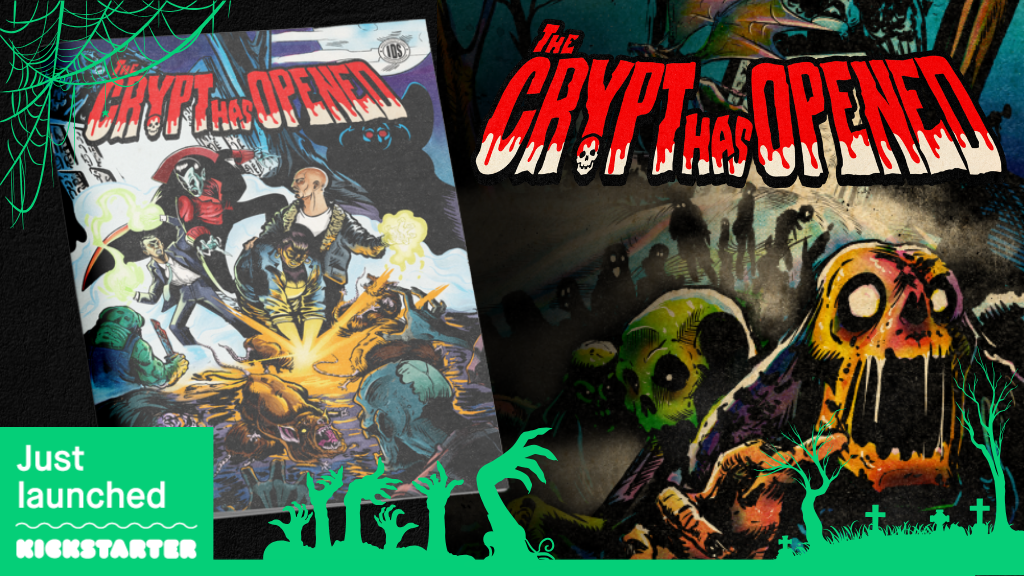
What’s this? Oh, I guess I have learned a thing or two. Or at least it felt like I have when I sat down to outline my presentation. It came to me fairly easily as I broke it down into six “phases.”
Step 0
Find a design group! Either online or in person. Having a group of like minded designers whom you trust and whose opinion you can lean on will be the difference between sitting on a half-finished idea and releasing a game.
step 1 – Name Your Goal
When you start out you should be asking yourself several questions to help you define the goal of your game.
- Is it a game or supplement?
- Are you making a zine?
- Who is your audience?
- What “problem” does your game solve?
Naming your goal will give you a guide post, a concept, an idea to aim for. You can change your goal as you develop the game. I certainly did with The Crypt Has Opened, but you’ll need that initial push to get you started in a direction.
Step 2 – Research
This step will be ongoing throughout your life as a game designer, but here is the time to really focus in on it. At this step you will be making targeted choices for your research, to help you answer even more questions such as:
- Are there games similar to your idea on the market? (Its OK if so, there is always room for more)
- If a supplement–
- Are there similar supplements already out there? How can you differentiate yours?
- What idea does yours add to the genre? Maybe you’re trying to subvert it.
- If a new game–
- How did a game similar to yours solve various game design challenges?
- How can you iterate on what came before? Here is where your deep dive into PbtA games will be useful. Each may use the same base idea but all add their stamp to it. Monster of the Week has a significantly different vibe than Apocalypse Keys.
Step 3 – Design Process
This step will be a personal journey for each of us. No two designers are going to have the exact same process. We will share ideas with one another on how we’ve overcome challenges, but you’ll have to find what works best for you. That said, here are some of my thoughts on it.
Will you start with story or mechanics first? Each has their benefits and shortcomings and every game may start a little bit different.
If you start with story, you’re jumping into the fun part first and it can be very motivating. Writing the story can also help spur mechanical ideas that you’ll use to support the narrative!
Mechanics first means you’re getting the “hard” part out of the way. Mechanics can be fun, but also tedious as you will be constantly tweaking and reworking them until they sing. And where a narrative can inform the mechanics, so to can the mechanics inform the story! For The Crypt Has Opened, the mechanics came first and absolutely molded the narrative so that the two have nearly become inseparable.
Because yes, system matters.
Get it to the table yesterday!
Get something to the table fast and start rolling dice. Even if it is by yourself at your kitchen table. Sitting too long on your idea and you may second guess yourself without any data to back it up. Or you’ll spend ages building out every little idea and sub-system that you’ll end up throwing out later.
Start fast but build up slowly.
Playtesting
This is probably going to be the biggest roadblock you’re going to come up against. It can be difficult to rope friends and family into testing your game let alone strangers. One, this is why we started with the design group in Step 0. These folks will be your first line of play testers and who will help you get it ready for the general public.
After that, how do you find play testers? There are several places you can try:
- Your FLGS
- A library
- Discord (assuming that don’t muck it up)
- Forums
- Blue Sky
This may also be where you’ll have to become Kevin Costner. “Build it, and they will come.” At my local FLGS I started a quarterly Developer’s Night. Every 3 months we get together for an hour and have a little designers round table to talk about what issues we’re running up against and try and help each other out. After that players are invited to show up and test the games being discussed! We limit it to four games per meetup which has helped make sure everyone gets their game tested.
It has been very successful. The game Blightfall has been tested there and funded in 90 minutes!
Iterate, Iterate, Iterate
Now you’re just in the cycle of testing and iterating on your ideas and from feedback. This can be both a slog and a rewarding experience. This is also the area where you can easily lose confidence based on the feedback you receive. But don’t fret, I have a way to handle receiving feedback that’s helped me through writing novels and now two games.
Taking feedback: If one person says it, changes are you can probably ignore it. If twp people say it, take note of it and give it a second look after more pressing designs are taken care of. Should three or more people say it and it is a problem that needs addressing immediately.
That approach has been so useful to me and I hope it is useful to you.
Step 4 – Preparing for release
Sourcing Art
I know a lot of you are thinking, how do I find artists that fit within my budget? I was cool art work! Maybe I can just use this little thing over–DO NOT USE AI! TTRPG audiences want to support humans and human made art. They rightfully so can sniff out AI slop. Once you use it, you’ll never shake the stink.
That doesn’t mean you’ll never have art. There are other options. Free options. Such as using the National Gallery of Art! You can freely use the art found there to create fantastic layouts with evocative pages.
I also have a few images that I have placed under the Creative Commons license, BY-SA. Primarily anything found within WYRD Dungeon or several monsters from my Monster-A-Month Patreon from a few years ago. If you are unsure if something I’ve posted is free to use, just email me.
Editing
For editing purposes you can expect to pay around $.05 to $.10 a word depending on the credits of the editor, if they’re doing just a copyedit, or if they’re doing a developmental edit, or both. Check around Blue Sky for editors that fit the genre you’re writing for or have edited similar games as yours.
Layout
Layout is something you can either hire out for, which can be $5 to $70 a page, again depending on the credits of the layout artist you’re hiring. That said, there are many free layout templates which use Affinity Publisher (now a free program through Canva). Check out FrariRPGS.com to grab the free Affinity templates posted there.
step 5 – Releasing the game
Now you have to make the big decision. Do you want to crowdfund or release it yourself through just digital means. For my talk I honestly didn’t go into this part because I’m still pretty nascent to this part of the journey.
But what I do know is you have several options:
- Kickstarter
- Backerkit
- Gamefound
- Itch
What I will say it go ahead and get an Itch account now. It’s free to host your games, gives you a free site to share then, a blog to talk about them, and you can use your itch handle as your Blue Sky handle. Itch also allows you to accept either Pay What You Want for games or if you’re feeling froggy you can set a nominal fee.
Pitching to publisher
You may also not care to self publish! That’s OK, too. If you want to pitch to publishers there are a few things you’ll want to do. First, create a one-page sell sheet. Think of this as the back of the book. A short summary of the game, if its a supplement talk about what game it is for and what it adds, and if you have artwork or pull quotes from people that have played it put it there.
You will also want to research the publisher. Many will have a page on their site telling you how they want to receive the pitch or if they are accepting pitches at all. Larger publishers typically have a small window in which they accept new pitches. So check back often.
And one final bit of advice on pitching to a publisher. Rarely, do publishers want a pitch for a book or genre that is outside of what they already publish. Some people think that, “Oh this company already has a bunch of spooky games. They don’t want mine.”
No.
Wrong.
They want your spooky game because that’s what they publish! Evil Hat is a great example. While they will entertain looking at games outside of what they normally publish, by and large they are just looking for more PbtA games. It works for them, their audience loves them, and they know how to market it.
Q & A
Oh wait, I’m not at the con anymore. I can’t really do a Q&A section. Well, maybe I can. If you have any further questions you can comment here, message me on Blue Sky or Threads, or email me. I love talking about game design. Seriously I could have talked for two hours at the Con.
Yup. Right. Um…. yeah I guess I’ll see you by the campfire.
 When Suddenly! Games
Leave a comment