It tickled some part of my brain that said, “Yeah. This is right. Go with this.”
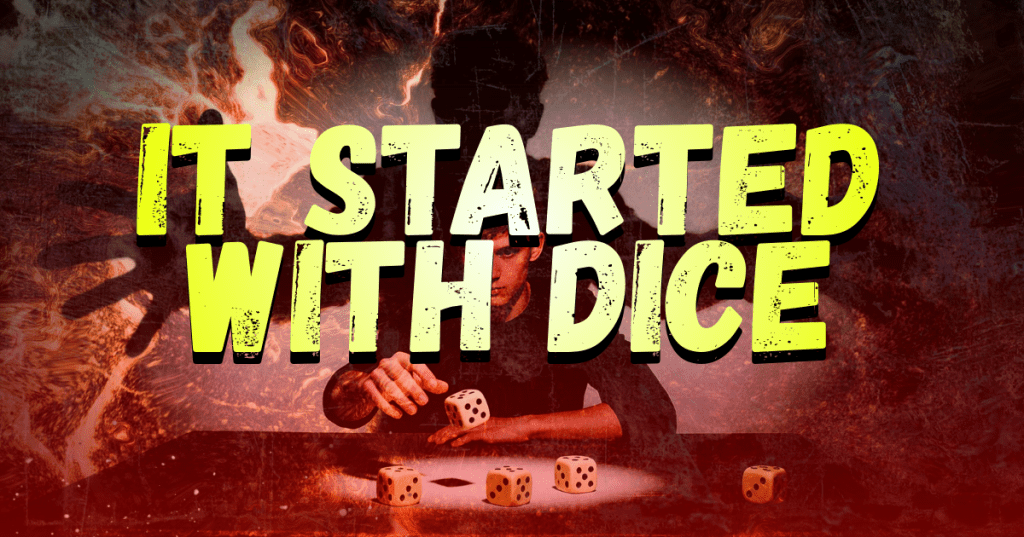
In the winter months of 2020, as the world was on the verge of changing in ways we could never have imagined, I sat at my coffee table and rolled 3d6 over and over. I just wanted to know how it felt. Not the rolling itself, but how the resolution mechanic rattling around in my head felt.
It felt good.
It tickled some part of my brain that said, “Yeah. This is right. Go with this.”
That was how the Imposition Dice System started. A 3d6 system. Though on the outset I had decided we would add the numbers together to hit a target range like Powered by the Apocalypse. A 1-4 is a failure, 5-7 mixed success, and a 8+ success.
Where things differed was that Imposition Die. That was the twist I had from the very start. In the initial system you’d add your two dice only if they both were greater than the Imposition Die (ID). If not, you’d ignore the lower result and only count the die higher than the ID. Honestly, I still think it’s a good mechanic. You get the high of rolling “big numbers” with box cars.
Still, most players had a hard time picking it up and it caused the moment to slow down as folks did the math. You were first having to do a greater than or less than comparison and then potentially addition. It may not sound like much but it was enough to cause issues.
Thankfully, early on, I was told about Ironsworn. It has a close idea, though some what flipped on its head. You roll your action die (d6) plus modifiers against the challenge dice (2d10). Instead of doing any additional math beyond adding modifiers to the action die, you simply compare the absolute values on the dice themselves. That little difference was all it took to break the Imposition Dice System wide open.
Now you’re just rolling your character’s two dice against a single Imposition die and hoping each are higher. Both higher? Success. Only one higher? Success with consequences. Both lower? Failure. That’s it. And it’s fast.
It also helped make the ticking of the Imposition Die make a lot more sense, as well as the choice to use almost all of the other dice!
Sorry d20, you’ve got plenty of other games to have fun with.
All the same, my good friend Penny wrote up a small script that let me run thousands of simulated rolls between both systems. Even though it all felt good (which I totally support developing a system on vibes), I did want to see just how the math landed. As it would go, the new system not only had a good feel but the math also had a better “curve” to it.
Having the dice resolution mechanic before the setting was certainly a choice. One that happened to work in my favor this time. One that I think will help me when/if I decide to write a different setting using the same system. Would I do it that way again? Probably yeah. System matters as they say.
In less than a week I launch the crowdfunding campaign for The Crypt Has Opened. Not by myself, but with a host of supporters and developers that believe in this game as much as I do.
February 3rd, the Night of the Open Grave is at hand. I look forward to ushering in the Crypt with you.
We’ll see you by the campfire.
 When Suddenly! Games
Leave a comment